

Basic knowledge of Photoelectric Sensors
Characteristic Data of Photoelectric Sensors
Characteristic Data
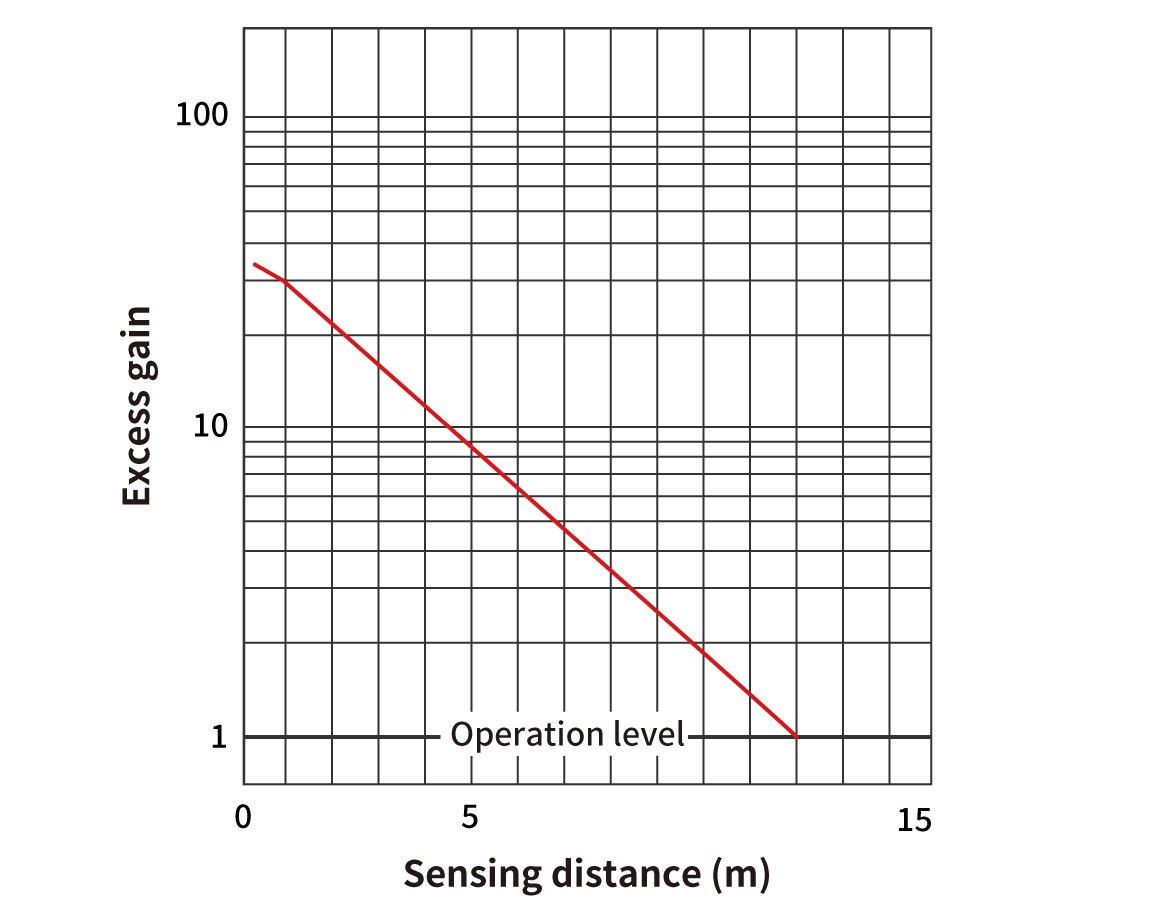
| Excess gain |
This indicates the amount of excess gain that is present in the received light output of the receiving part when the sensor is set to maximum sensitivity. |
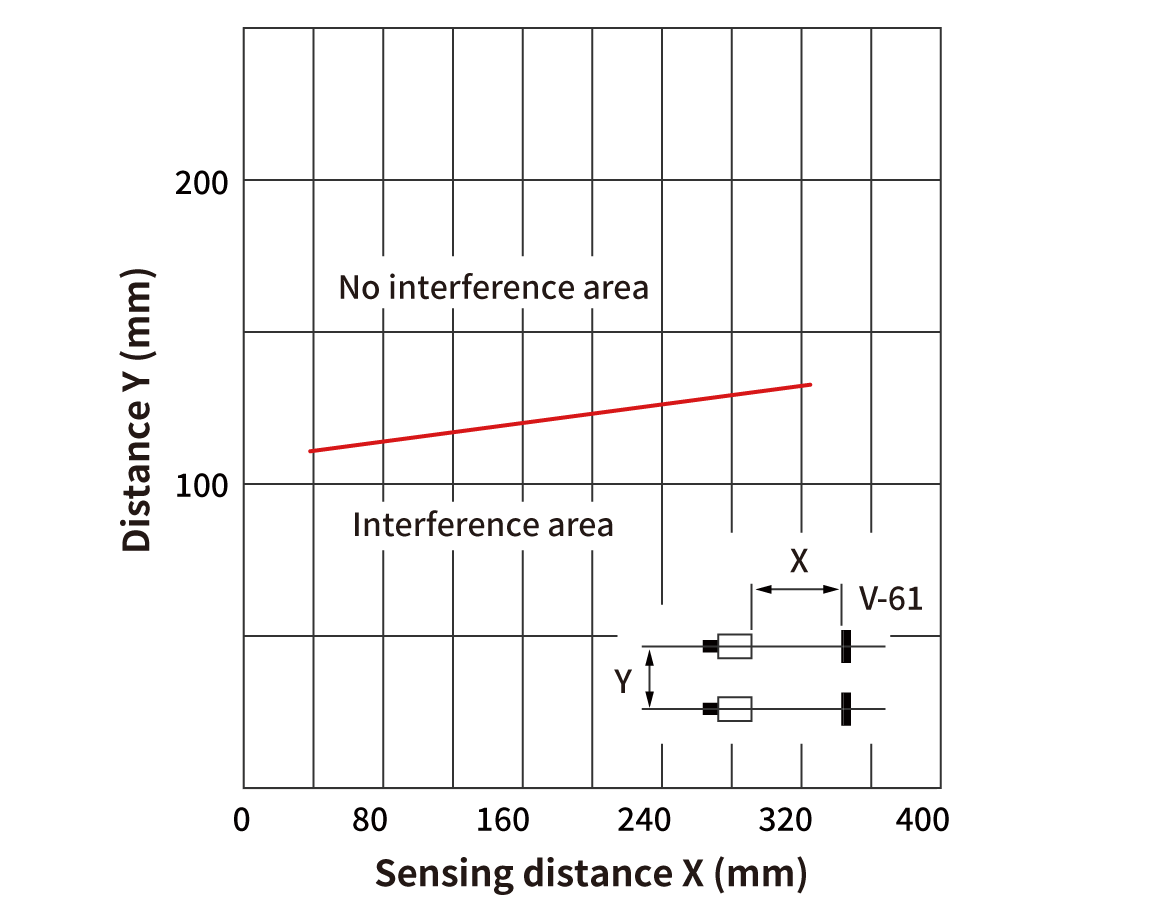
Interference area |
This indicates how far apart sensors need to be installed so that interference does not occur when sensors are being used in a line. After checking the distance on the horizontal axis, view the distance between the centers of the sensors on the vertical axis to determine how far apart the sensors need to be installed. |
|---|---|---|---|
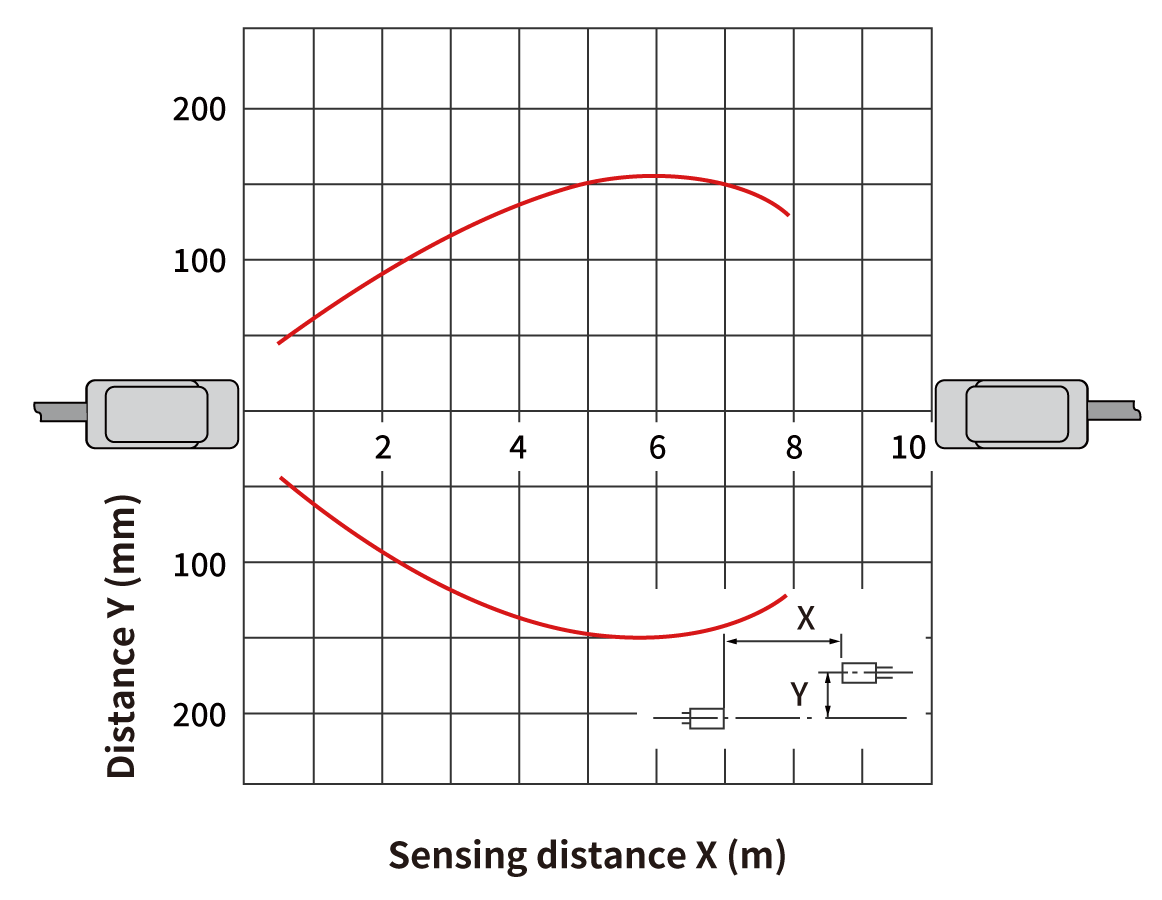
| Sensing area |
This indicates the degree to which the light spreads when a through-beam type sensor is set to maximum sensitivity. After checking the distance on the horizontal axis, view the spread of the light on the vertical axis to determine to what degree the light axis can be misaligned with detection still being possible. |
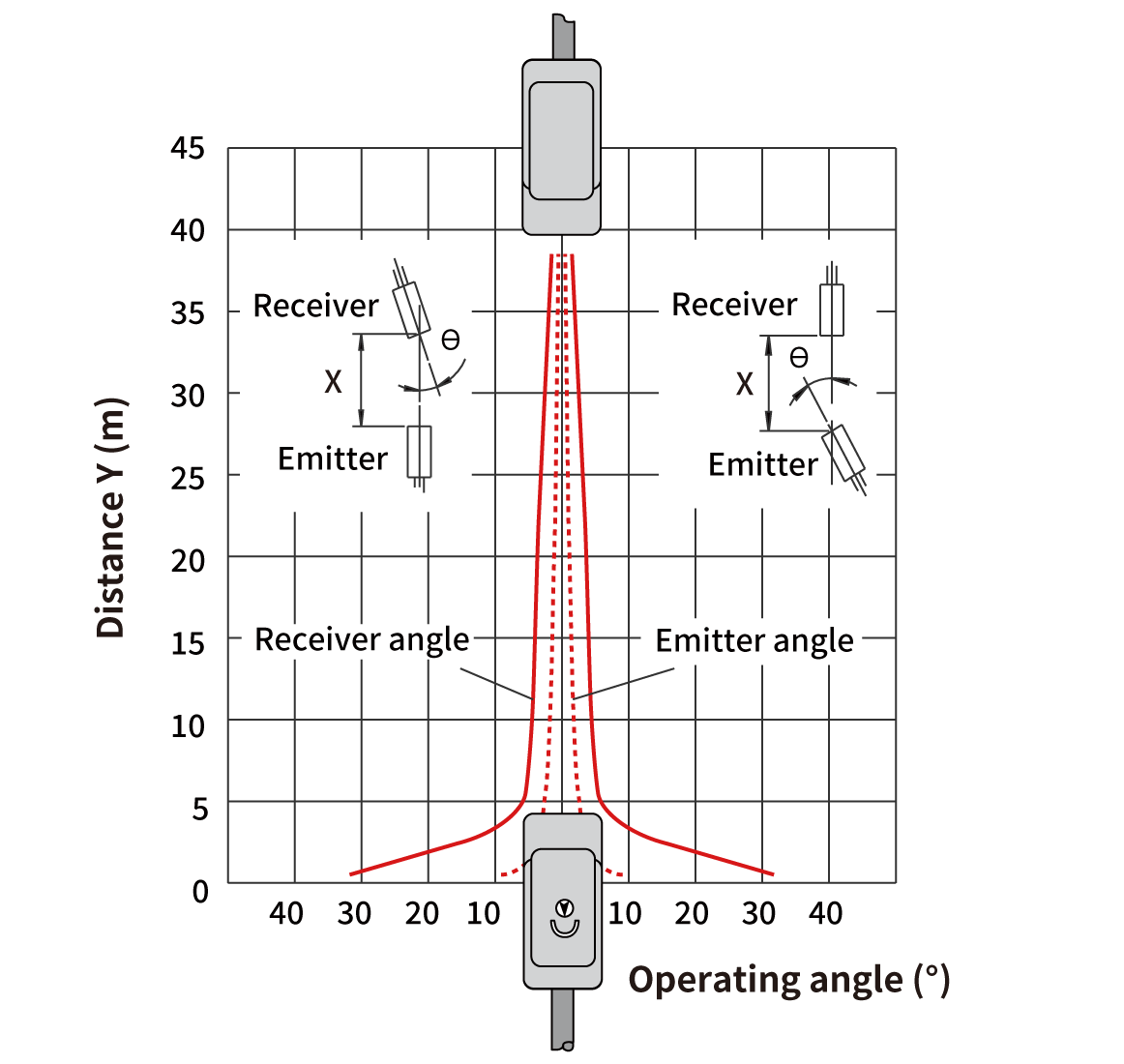
Angular deviation |
This indicates to what degree the sensor or reflector can be tilted when using a through-beam type or retro-reflective type sensor. After checking the distance on the vertical axis, view the angle on the horizontal axis to determine how many degrees the sensor can be tilted with the light axis still reaching the receiver. |
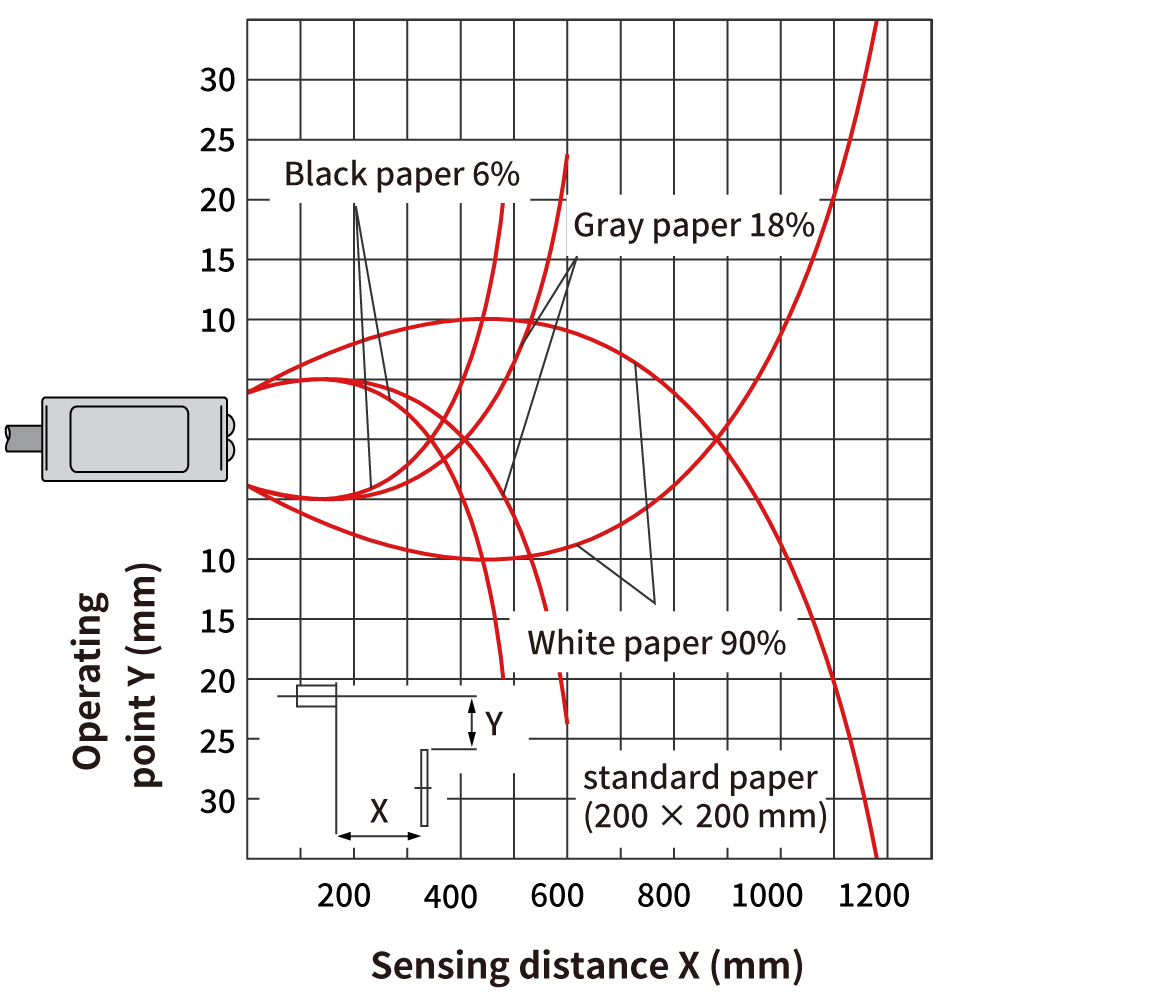
| Sensing area |
This indicates the area that is detected when a retro-reflective type or diffuse type sensor is set to maximum sensitivity. After checking the distance on the horizontal axis, view the spread of the light on the vertical axis to determine the workpiece detection position from the horizontal direction (the mirror position for retro-reflective types). |
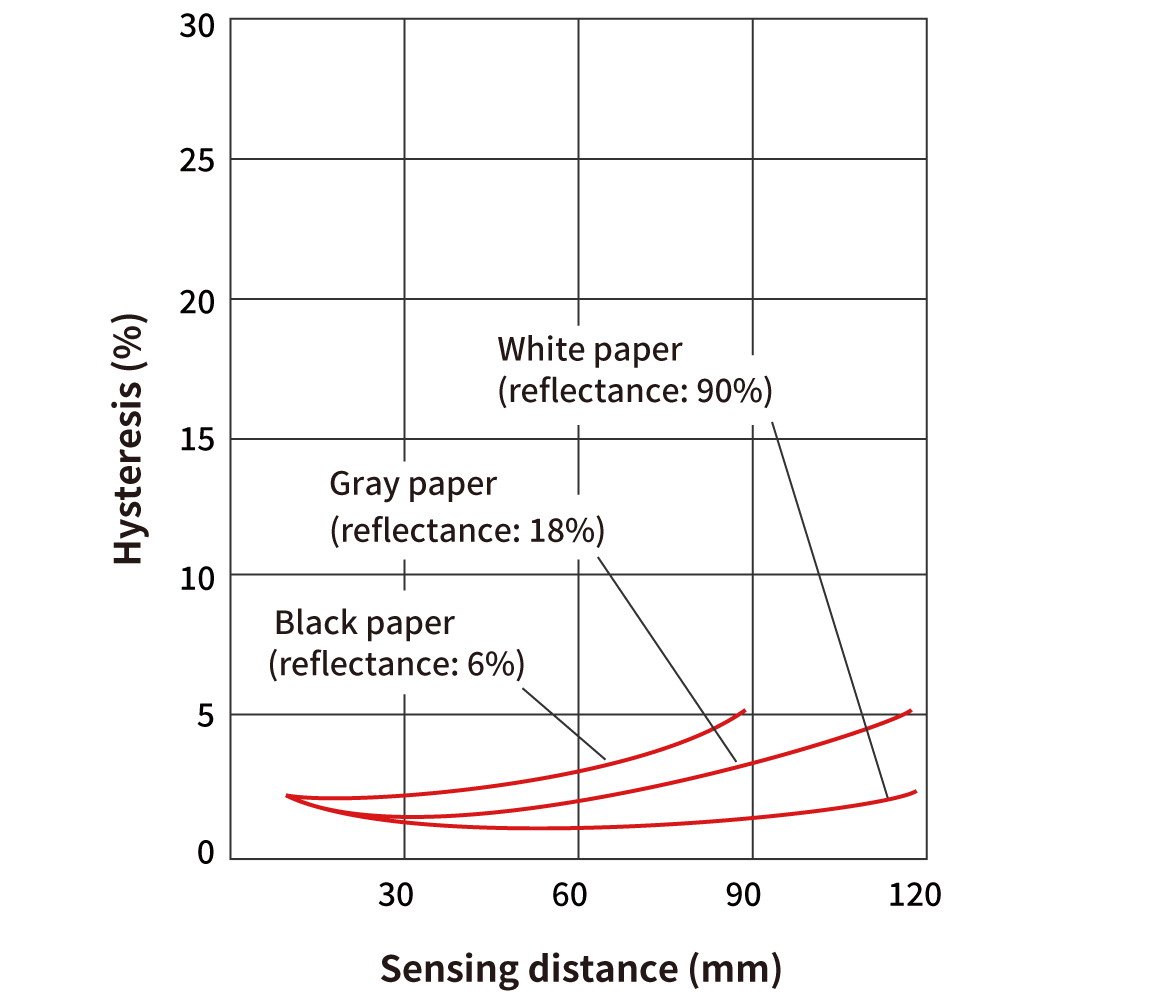
Hysteresis |
This indicates how much a diffuse type sensor can differentiate height differences according to the color of the object to detect. After checking the color of the object to detect and the distance on the horizontal axis, calculate distance x hysteresis on the vertical axis to determine how much the sensor can differentiate height differences. |
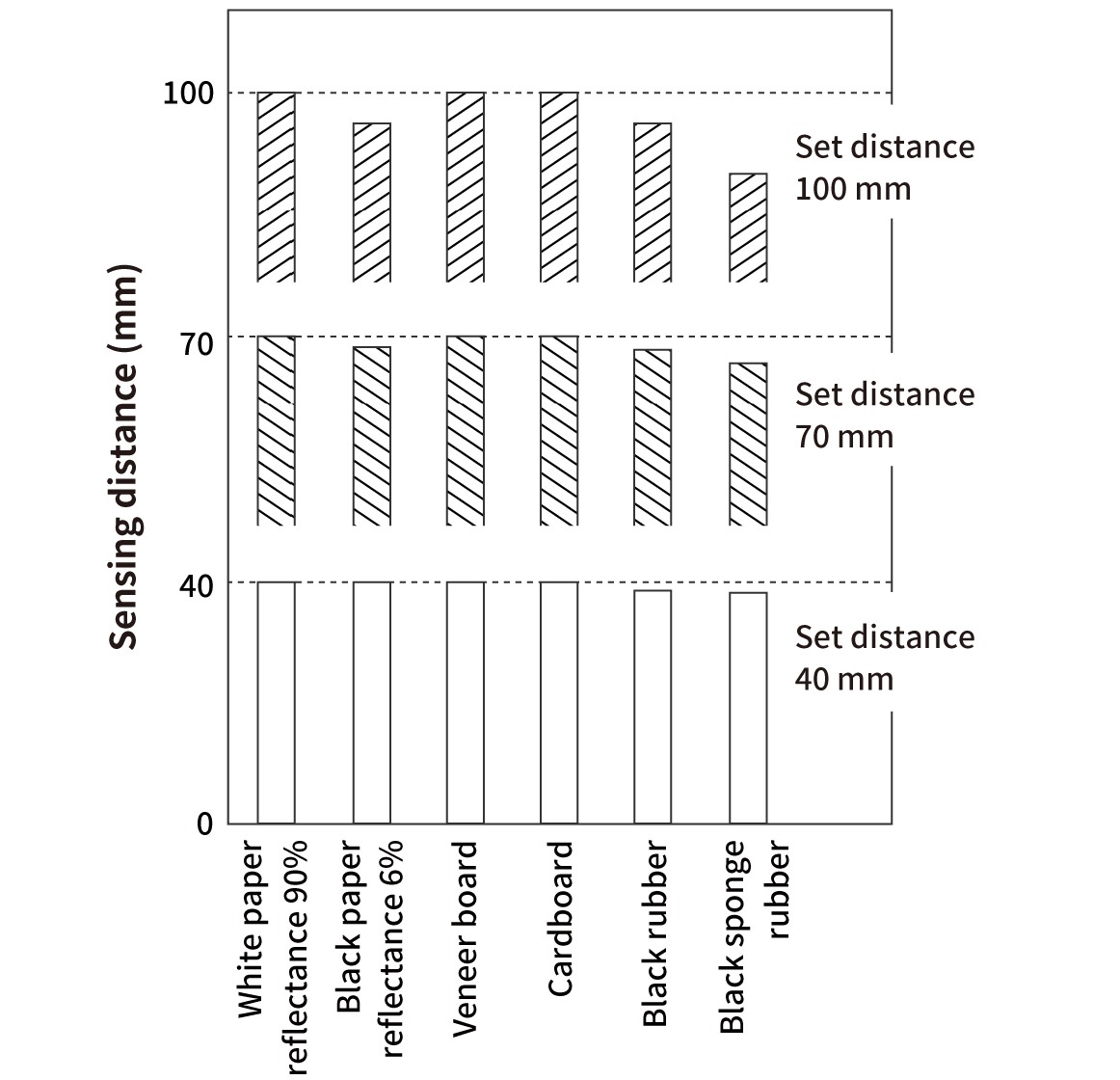
| Material response |
This indicates the degree to which a BGS type or TOF type sensor is affected by the material of the object to detect. After checking the material of the object to detect, view the distance on the vertical axis to determine how much of an error will occur for a white workpiece. |
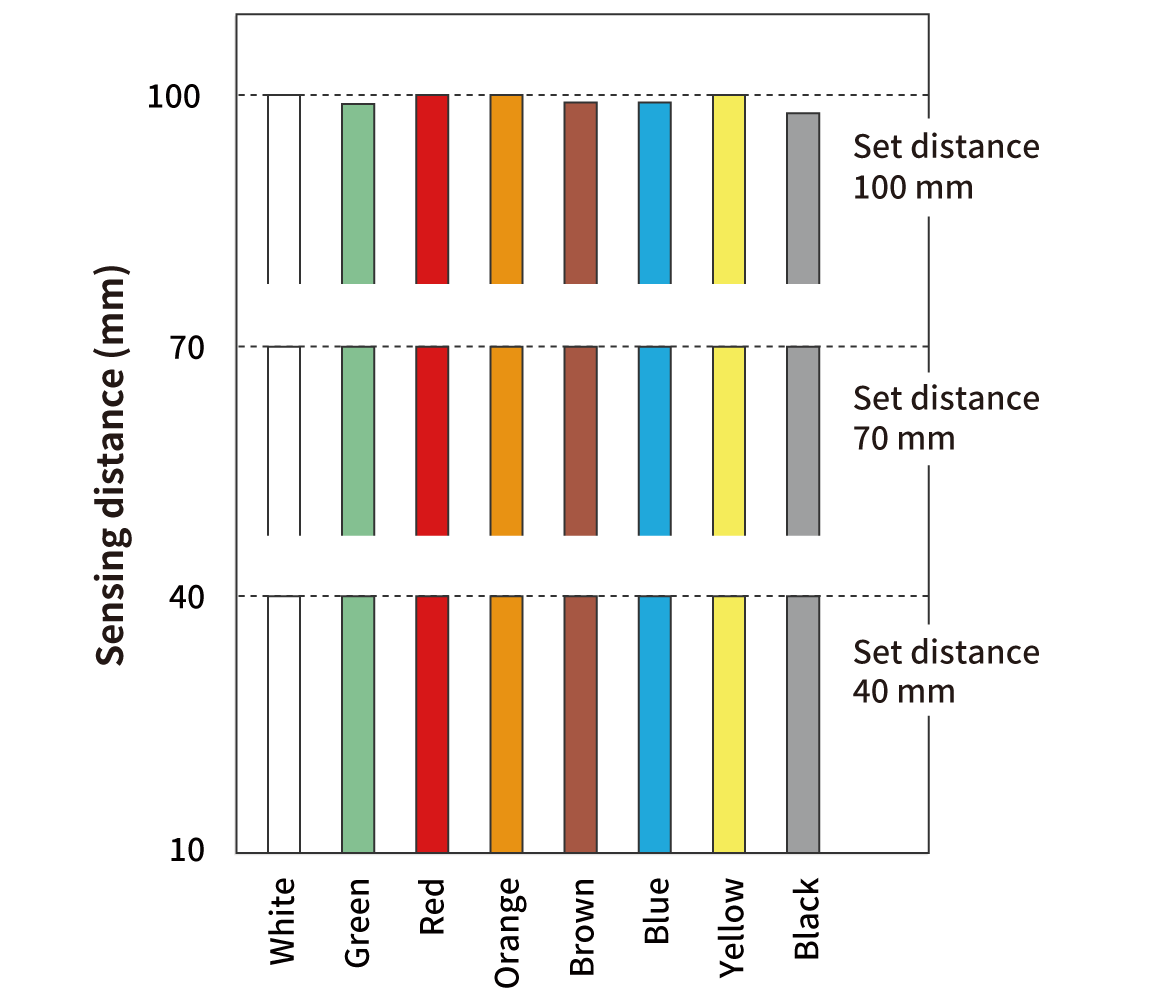
Color response |
This indicates the degree to which a BGS type or TOF type sensor is affected by the color of the object to detect. After checking the color of the object to detect, view the distance on the vertical axis to determine how much of an error will occur for a white workpiece. |
- Download List
- 20