What Is a BGS (Background Suppression) Sensor? Operating Principle & Recommended Models | OPTEX FA

What Is a BGS (Background Suppression) Sensor?

What Is a BGS Sensor?

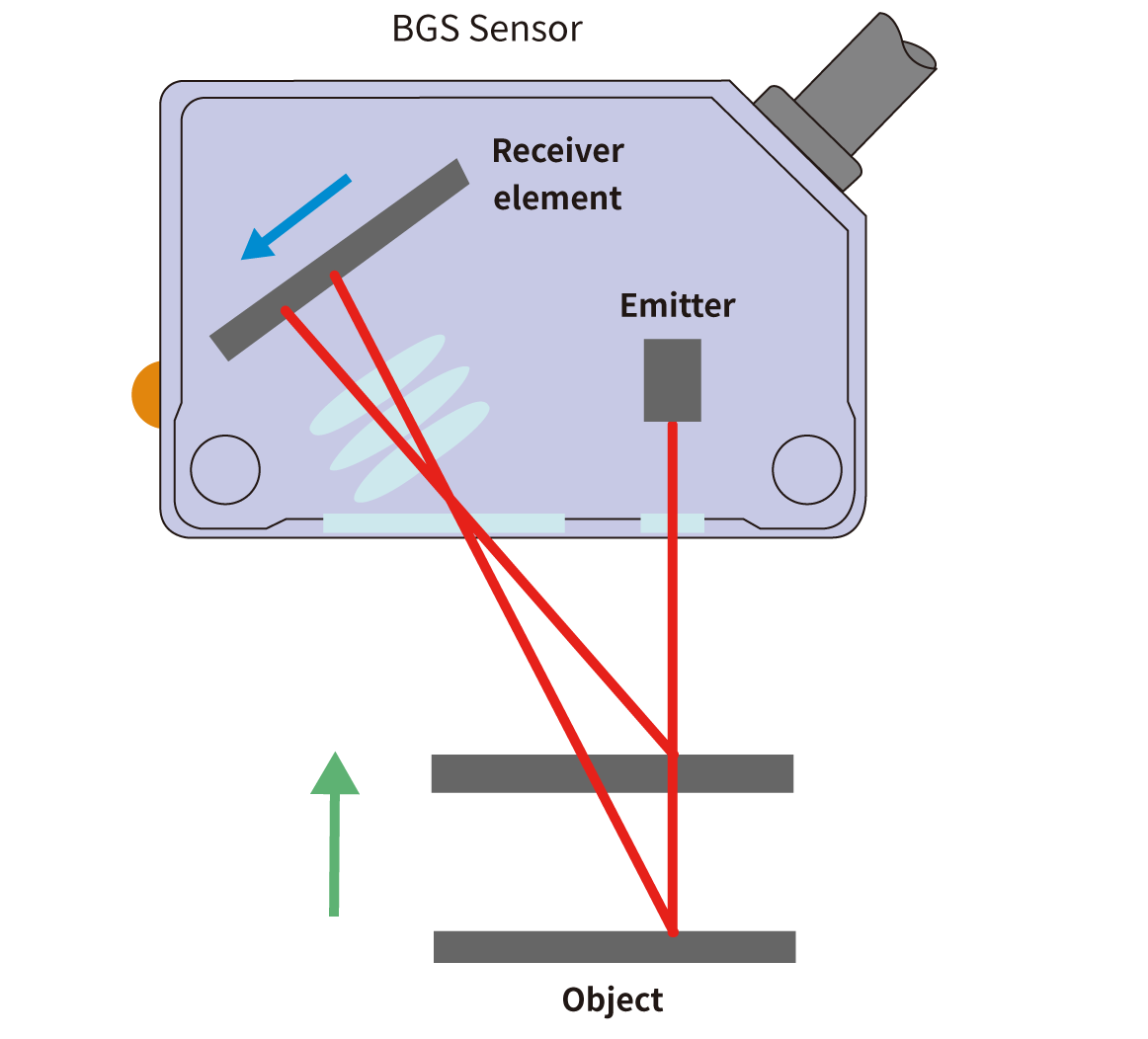
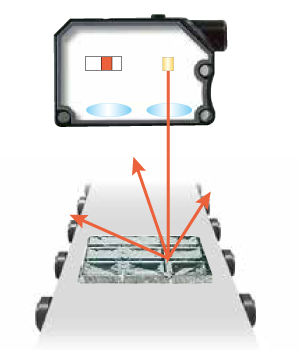
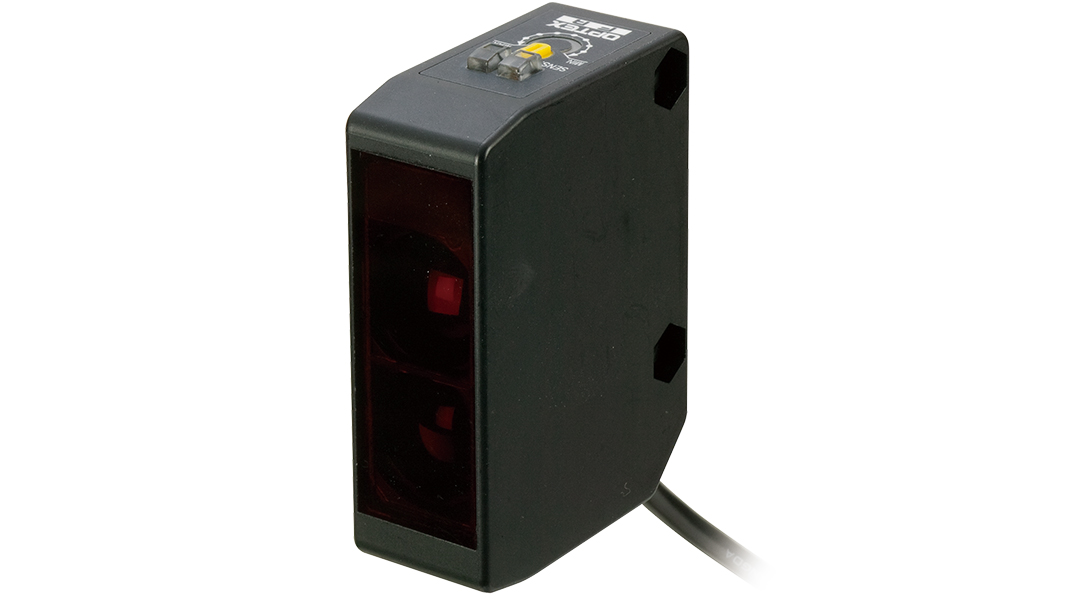
BGS stands for background suppression, and this type of reflective sensor operates on the principle of triangulation. Whereas normal diffuse-reflective type sensors operate by increasing or decreasing the received light amount, BGS sensors operate by determining distance, providing stable detection with advanced resistance to influences from object color, gloss, or tilting.

Operating Principle of BGS Sensors

The distance to the object is determined by forming a triangle between the emitter, receiver element, and object.
When the distance to the object changes (green arrow), the position of the reflected light on the receiver element also changes (blue arrow). In other words, the distance to the object can be determined based on the position of the light on the receiver element.

Operating Principle of BGS Sensors

When to Use a BGS Sensor

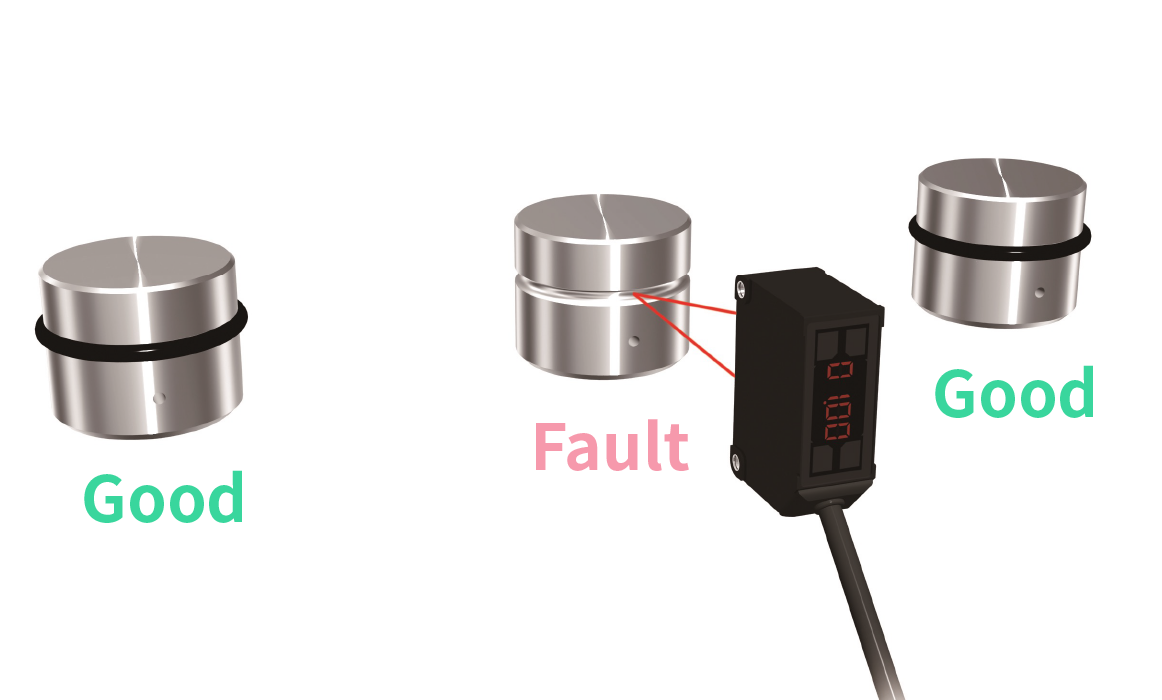
  • The object's reflectance is low (the object is dark).
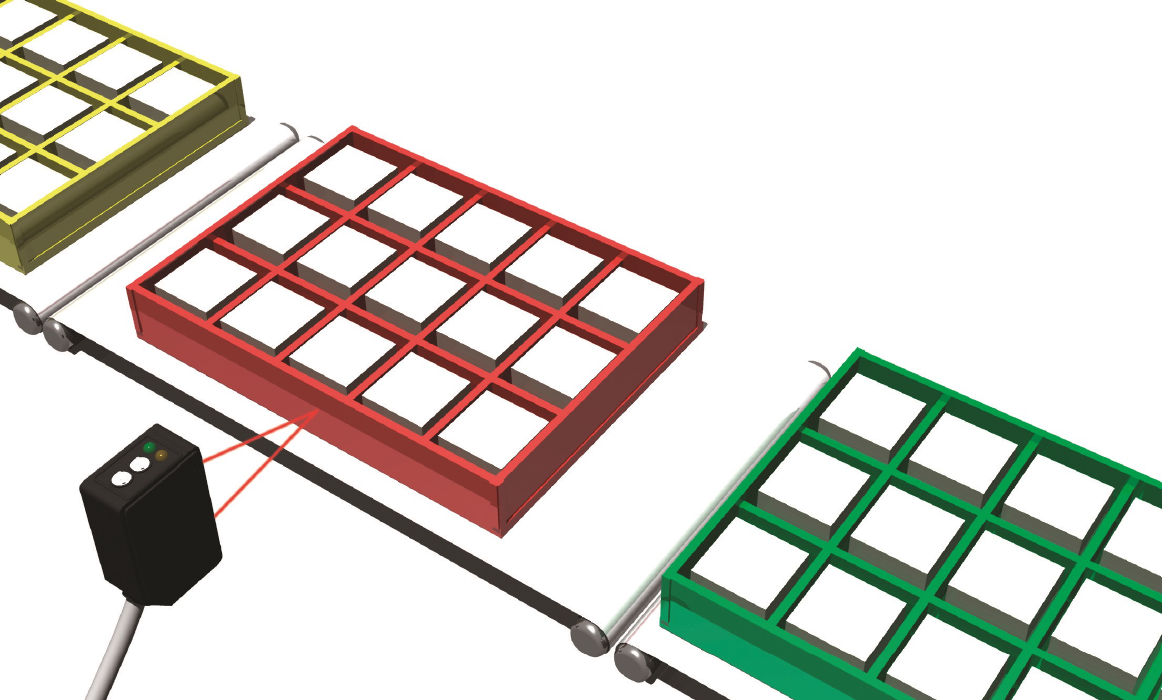
  • The object is available in various colors.
  • The distance between the object and the background is small (minimal step height).
  • The object has a glossy surface.
  • The object's detection surface is tilted.
  • When to Use a BGS Sensor1

    Effective for objects with low reflectance

  • When to Use a BGS Sensor2

    Effective for objects with various colors

Key Points for Selecting a BGS Sensor

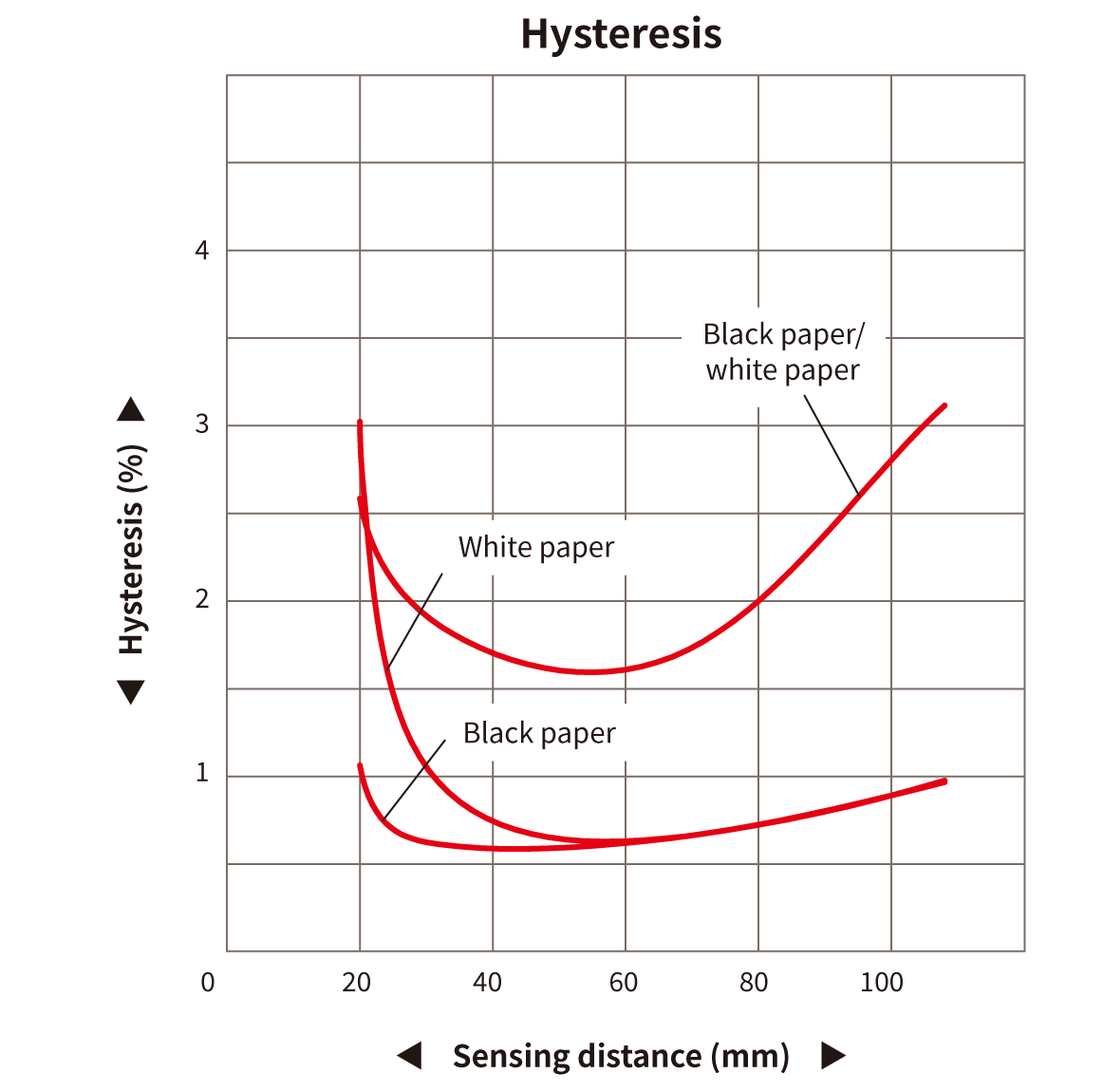
Hysteresis (Minimum Detectable Step)

This graph shows the minimum detectable step for each object color. After confirming the object color and distance (horizontal axis), multiply the distance by the hysteresis value (vertical axis) to determine the minimum step that the sensor can reliably detect.

For stable detection, a value of 2x the hysteresis is recommended.

Hysteresis Minimum Detectable Step

Number of Control Outputs

This refers to the number of outputs available when a BGS sensor determines the distance to an object.
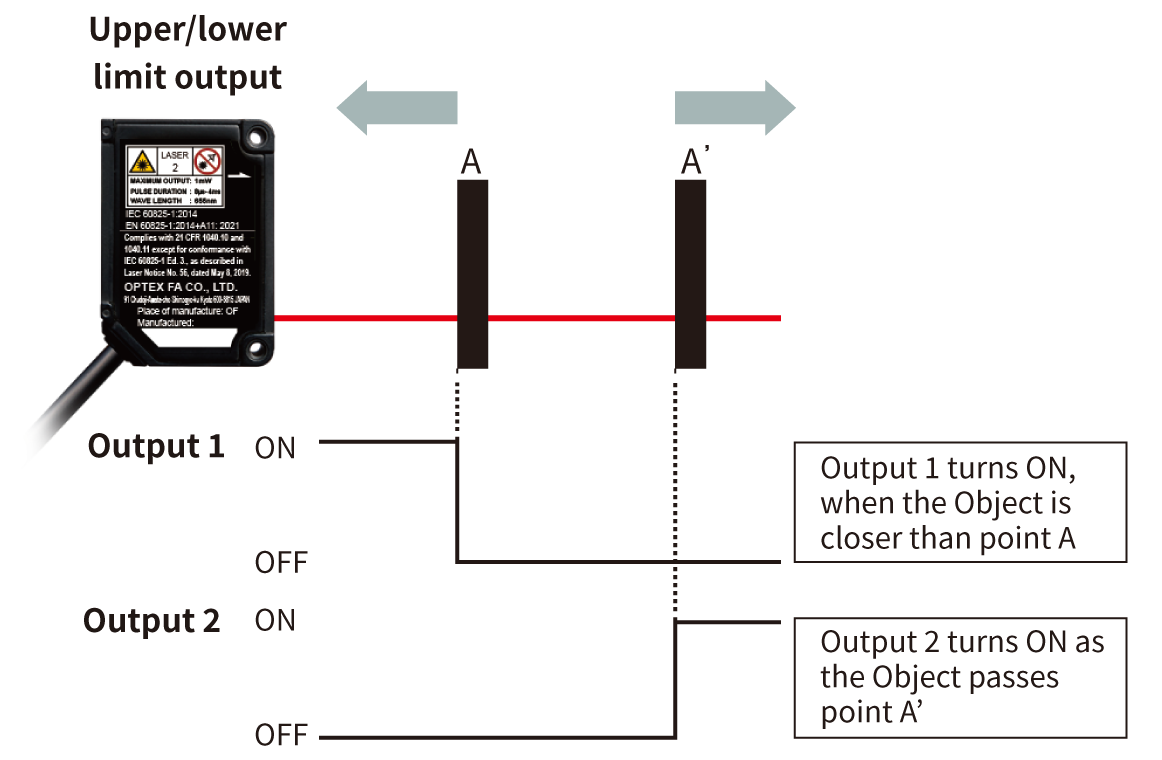
The number of control outputs affects the range of applications the sensor can support. For example, with a single output, the sensor can indicate either that the object is closer than the set distance or farther than the set distance. With two outputs, however, both conditions can be distinguished and output separately, allowing a single sensor to perform applications that previously required two sensors.

Number of Control Outputs

FGS Mode

While BGS ignores backgrounds located beyond the object, FGS mode (Foreground Suppression) uses light reflected from the background and detects an object when it interrupts the reflected light path. This enables stable detection of challenging targets, such as thin, dark objects and objects with uneven or glossy surfaces that are difficult to detect with BGS.

Note:

  • A light-colored background is required when using FGS mode.
  • FGS mode is referred to by different names depending on the series:
    ZA-B Series: FGS 1-point
    BGS-HL Series: Zone
    BGS-HDL Series: FGS
Object Not Present Tall Low-reflectance Glossy and uneven
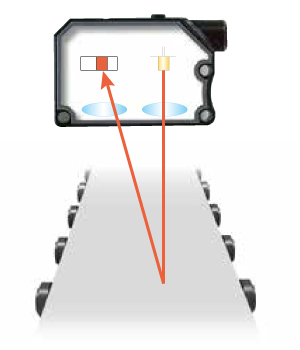
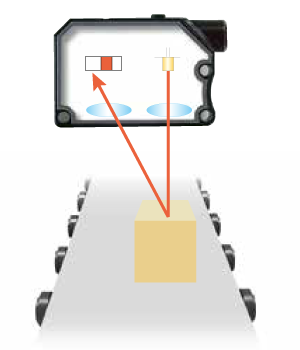
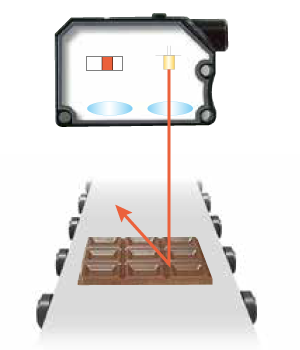
Output OFF ON ON ON
Explanation
  • FGS Mode 1

    Light reflected from the background is received only at a specific position on the receiver element (red area). The output remains OFF only when light is received at this position.

  • FGS Mode 2

    When a tall object is present, the reflected light is received at a position other than the red area on the receiver element, causing the output to turn ON.

  • FGS Mode 3

    For low-reflectance objects, such as black objects, the amount of reflected light reaching the receiver element is insufficient, causing the output to turn ON.

  • FGS Mode 4

    For glossy objects with uneven surfaces, reflected light may not reach the receiver element due to diffuse reflection, causing the output to turn ON.

Recommended Models

Lineup Catalog - English

Built-in Amplifier CMOS Laser Sensor

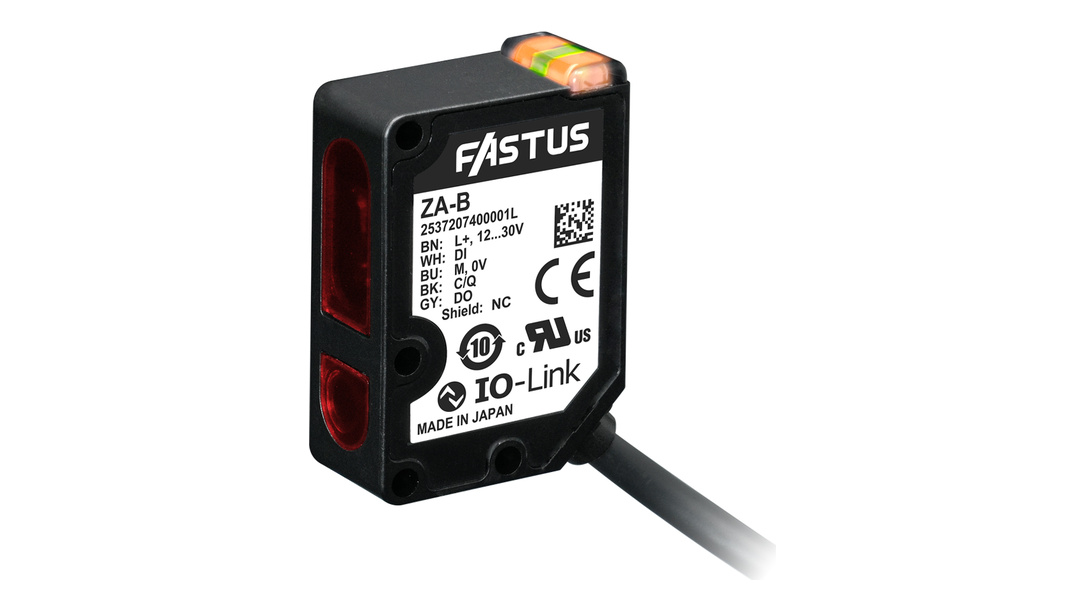
ZA-B Series

Micron-level repeat accuracy with background suppression CMOS laser sensors

  • IO-Link support: Connectable to various field networks via IO-Link Master
  • High-resolution OLED display
Lineup Catalog - English

BGS Sensor with IO-Link Support

Z4B Series

High-power and small-spot LED light source

  • IO-Link support: Connectable to various field networks via IO-Link Master
  • Enhanced ambient illuminance resistance
  • IR LED types added to the lineup
Lineup Catalog - English

High-accuracy Laser Sensor

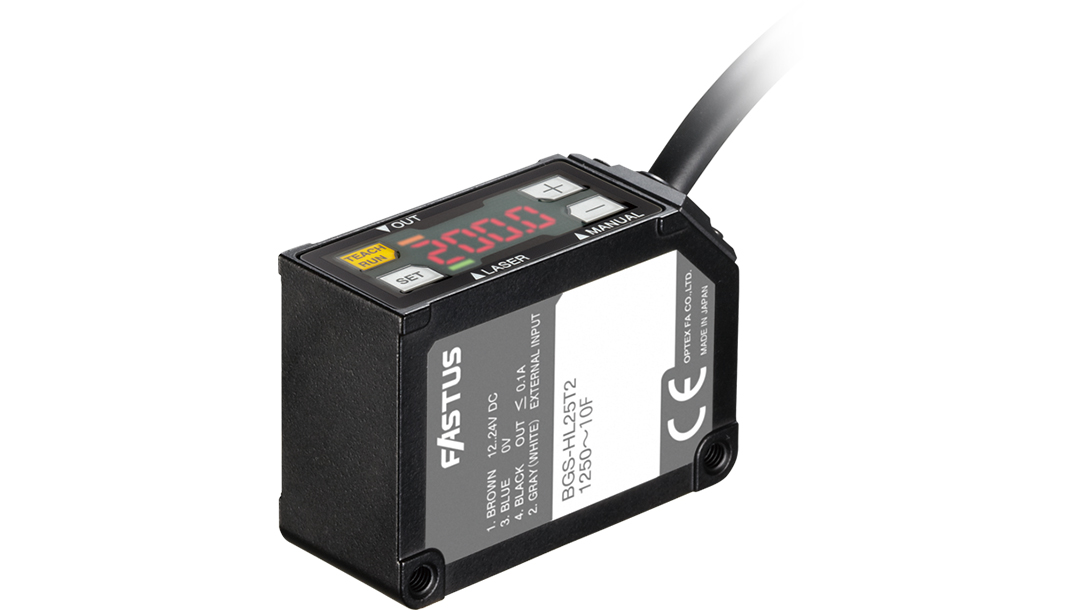
BGS-HL/
BGS-HDL Series

High resolution BGS laser sensor

  • Minimum detectable height difference: 0.08 mm (BGS-HL05xx/-HDL05xx)
  • Built-in controller and 4-digit display
  • Stable detection regardless of object color
Lineup Catalog - English

Standard-sized Sensor

BGS-ZL/
BGS-Z Series

Laser and high-power narrow beam LED

  • 2 sensing ranges with laser models and 3 sensing ranges with LED models
  • Highly accurate height difference detection due to low hysteresis
  • Fast response of 250μs on laser models and 500μs with LED models
Lineup Catalog - English

Stainless-steel Housing Sensor

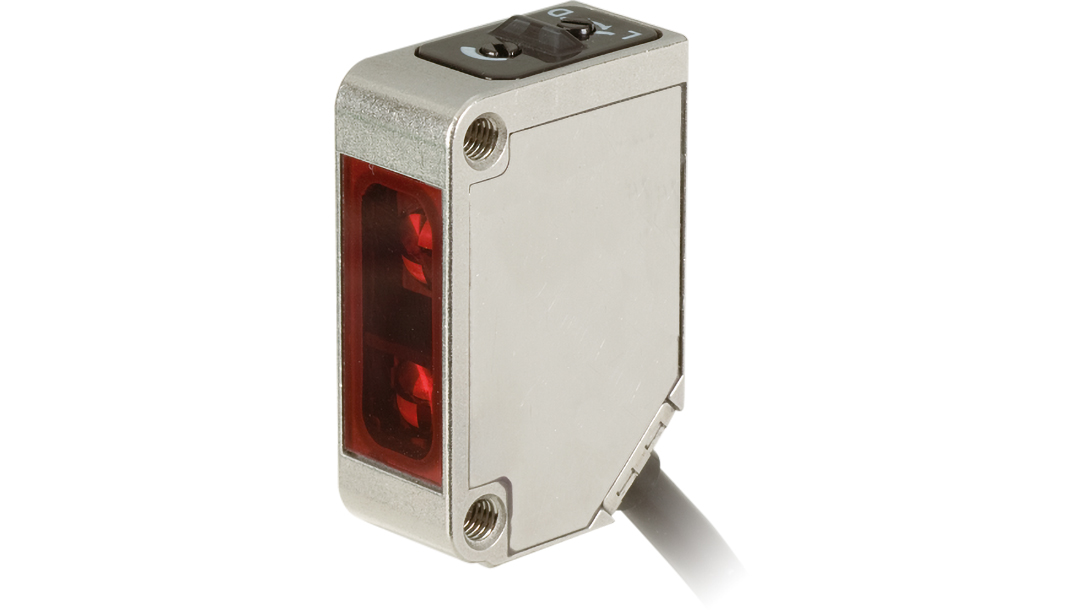
BGS-ZM Series

Excellent water/oil resistance
Suitable for automobiles, machine tools and food industry

  • Degree of protection: IP69K (cable type), Equivalent to IP67g (connector type)
  • Equipped with an 8-turn potentiometer
  • Low deterioration 4-element red LED
Lineup Catalog - English

Universal Voltage LED BGS Sensor

BGS-2V Series

Standard BGS sensor designed as the successor to the BGS-V Series

  • Dual lens achieves long range detection
  • Maximum sensing distance of 1 m
  • Universal voltage type that eliminates the need to choose power supply

문의하기

저희 전문 상담원이 고객님의 요구에 맞는 최적의 솔루션을 신속하게 제안하고, 전 과정에 걸쳐 지속적인 지원을 제공합니다.

제품문의·기술지원
마이리스트
20